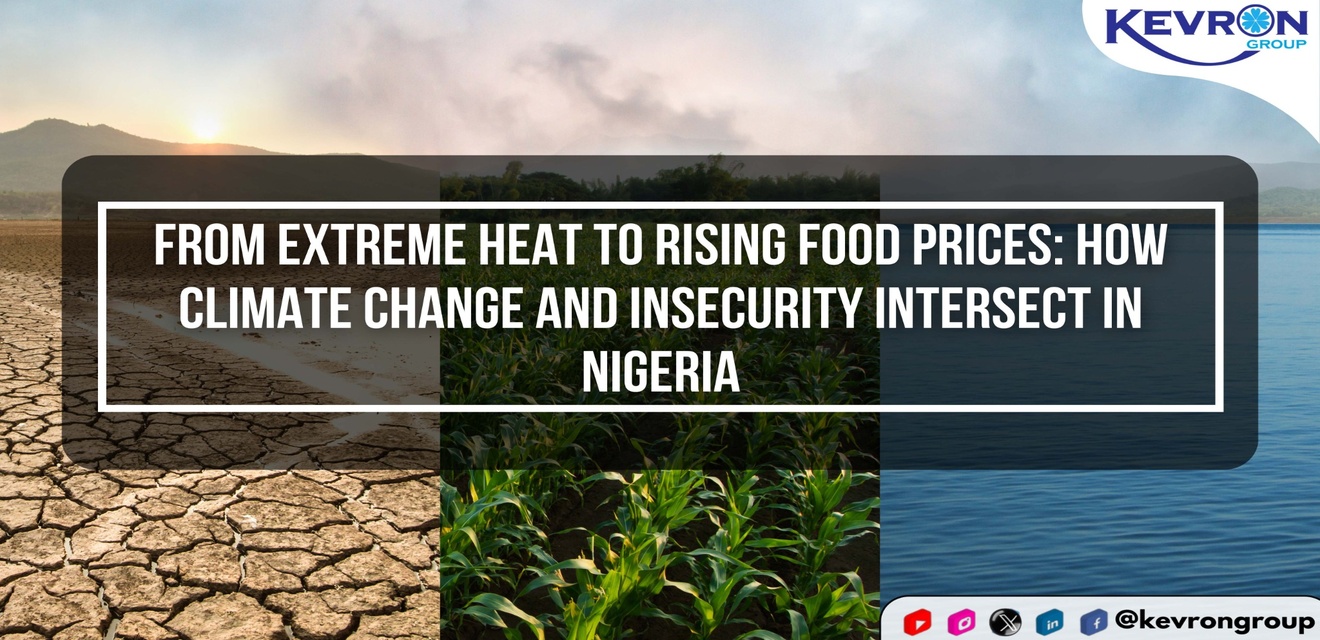
From Extreme Heat to Rising Food Prices: How Climate Change and Insecurity Intersect in Nigeria
The recent extreme heat being experienced across many parts of Nigeria is a clear signal that climate change is already affecting everyday life. Prolonged high temperatures increase heat stress, reduce productivity, worsen health outcomes, and place additional pressure on already overstretched energy and water systems.
Simple adaptive measures matter more than we often realise. Staying hydrated, limiting outdoor activity during peak heat hours, improving ventilation, using reflective materials, planting shade trees, and prioritising cooling spaces for vulnerable groups such as children, the elderly, and outdoor workers are essential. Shifting to energy-efficient, low-emission devices, ensuring regular maintenance of cooling systems, and reducing the use of heat-generating equipment help lower indoor heat stress while easing pressure on energy systems. Flexible work arrangements during extreme heat and heat-responsive building designs can further protect health and productivity. These are not luxury actions; they are survival strategies in a warming climate.
Beyond heat stress, climate impacts are increasingly putting pressure on Nigeria’s food systems. Flooding in major food-producing states continues to disrupt local production. For example, parts of Taraba State, a key producer of rice and maize, have experienced flooding that damaged farmlands, while similar challenges have been reported in Benue, Kogi, Niger, and riverine areas of the Niger Delta. These disruptions reduce yields and tighten food supply, contributing to higher food prices felt nationwide.
Reducing the impact of flooding also requires practical adaptation measures like improved drainage, protection of wetlands and natural floodplains, support for climate-smart agriculture, and strengthened early-warning systems that enable farmers to prepare ahead of extreme rainfall events.
Importantly, climate impacts do not act in isolation. Insecurity in rural areas and weak transportation networks further limit farmers’ access to markets, increase post-harvest losses, and raise the cost of moving food from producing regions to urban centres. Addressing security challenges, improving transport infrastructure, and strengthening climate adaptation together will significantly improve food availability, affordability, and overall economic resilience.
Nigeria has shown commitment through national climate policies and net-zero ambitions. Building on this progress will require stronger coordination across federal, state, and local governments, with greater focus on supporting climate-vulnerable communities, improving rural infrastructure, and integrating climate resilience into security and transport planning.
Climate change, food security, energy, transportation, and safety are deeply interconnected. Addressing them together is key to building a more resilient Nigeria.
Author: Shadrach Fowode