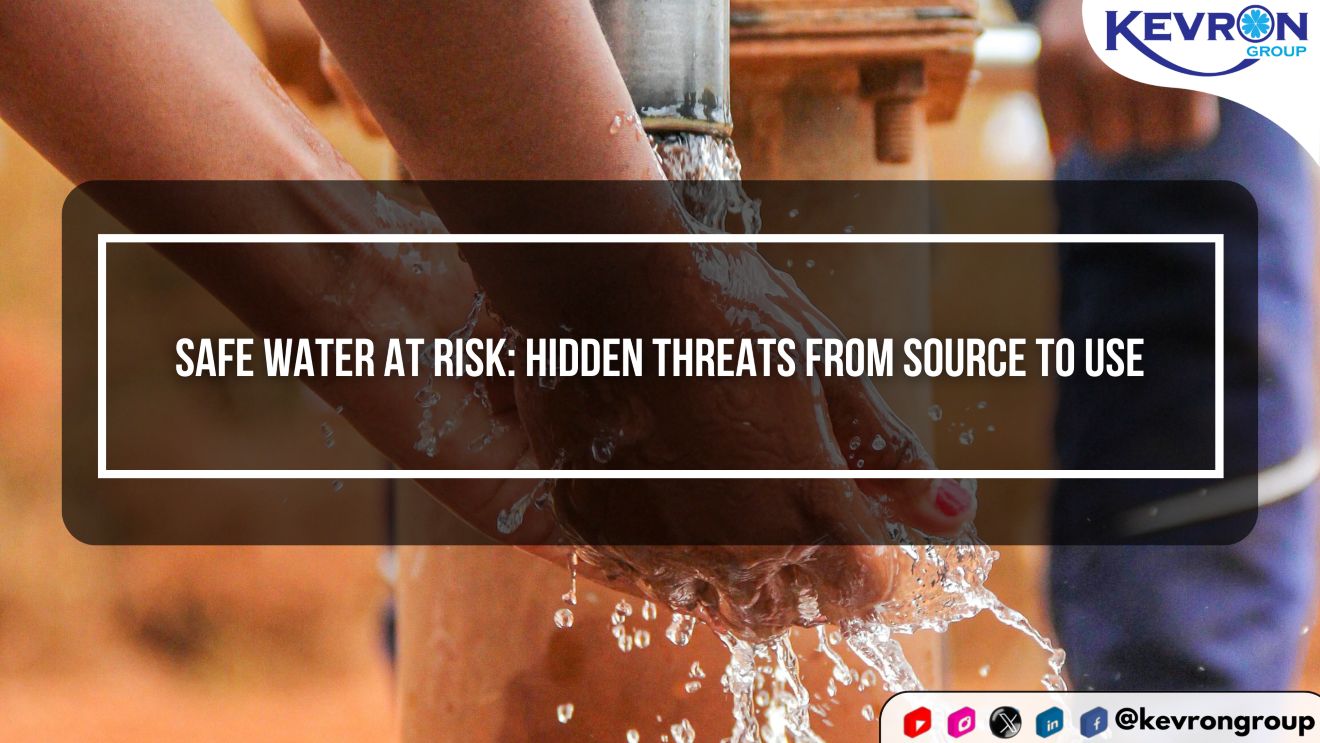
SAFE WATER AT RISK: HIDDEN THREATS FROM SOURCE TO USE
Access to water does not always guarantee safety. Even when water is treated or filtered, it can become contaminated during storage, distribution, or everyday use both in households and workplaces, posing hidden risks to human health. Ensuring safe water requires vigilance at every stage, from source to point of use.
Why “Clean Water” May Not Always Be Safe
Water that appears clean may still contain chemical, physical, or biological contaminants. After treatment, water can be recontaminated through poor storage, aging infrastructure, or improper handling practices.
Hidden Risks Across Homes and Workplaces
- 1. Poor Storage Systems (Tanks & Reservoirs)
Accumulation of dirt, sediments, and microbial growth
Infrequent cleaning of overhead tanks
Recontamination of treated water
- 2. Aging or Corroded Pipes
Rust and metal leaching into water
Deterioration of plumbing systems over time
Contaminants entering water before it reaches taps
- 3. Changes in Water Quality
Imbalance in parameters such as pH
Chemical reactions during storage
Presence of dissolved substances not removed by basic filtration
- 4. Everyday Use Risks in Offices and Shared Spaces
Contaminated water used for washing hands
Dirty water used to rinse utensils, cups, and kitchenware
Cross-contamination through shared facilities (kitchens, restrooms)
Increased exposure due to multiple users relying on the same system
Health Implications
Spread of waterborne diseases
Exposure to harmful contaminants
Increased risk of infections through improperly cleaned utensils
Long-term health effects from repeated exposure
Why This Matters
Water safety goes beyond access it includes how water is stored, distributed, and used daily. In homes and workplaces alike, poor water quality can compromise hygiene, food safety, and overall well-being.
Practical Solutions for Safer Water
Regular Maintenance
Clean water tanks and storage systems frequently
Inspect plumbing systems for damage
Water Quality Monitoring
Test for pH levels, microbial contamination, and chemical pollutants
Infrastructure Upgrades
Replace old or corroded pipes
Use safe and durable materials
Improved Treatment Systems
Use appropriate purification technologies
Ensure proper maintenance of filters and systems
Hygiene Practices in Offices
Use safe water for washing utensils and food-related activities
Maintain cleanliness in shared kitchens and restrooms
“Safe water is not just about access, it is about quality at every point of use. From homes to workplaces, protecting water from source to tap is essential for safeguarding health and ensuring sustainable living.”